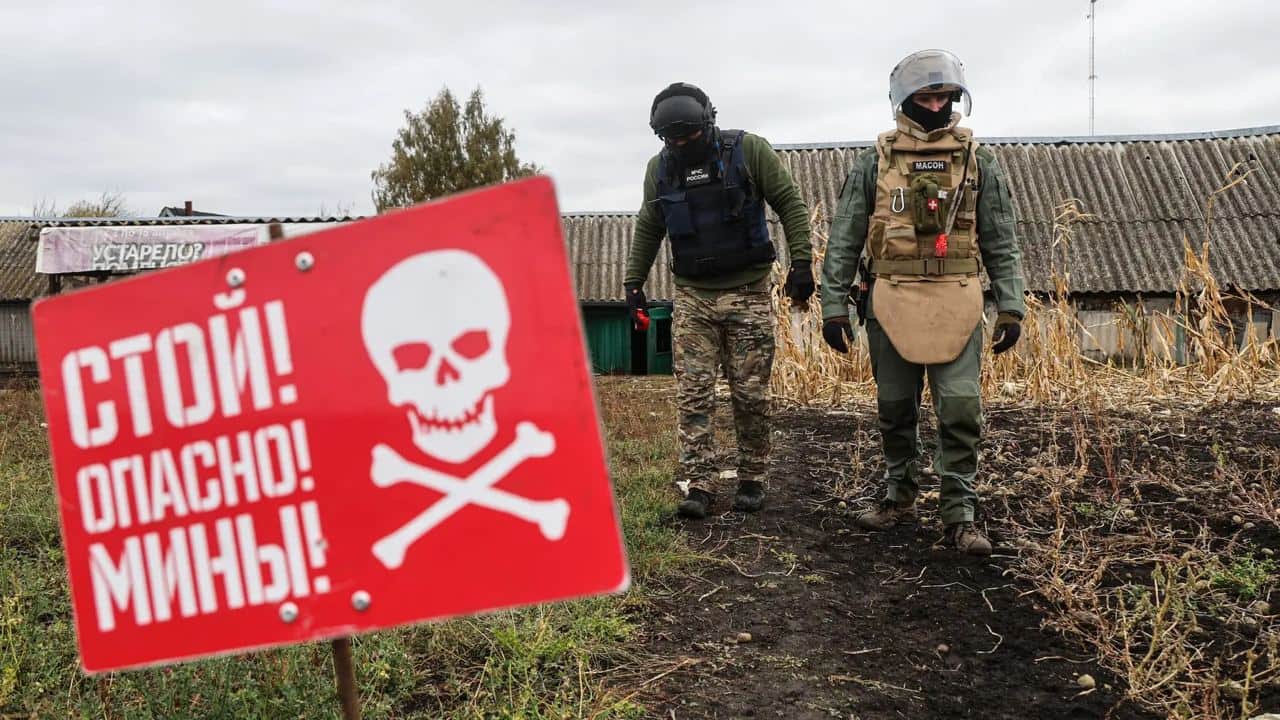
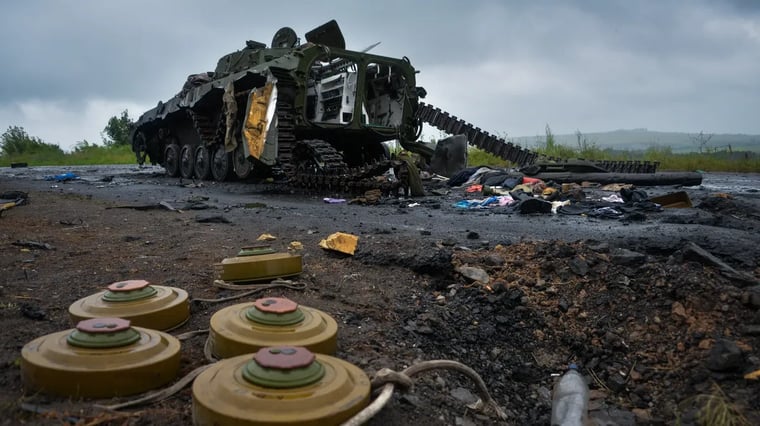
As a result of Moscow’s full-scale invasion, Ukraine is now the most heavily mined country on earth, with roughly 25% of its territory suspected of being contaminated as of mid-2025. But civilians also face danger from mines and unexploded ordnance across the border in Russia's Kursk and Belgorod regions, where residents are regularly killed or injured. According to experts, demining such large areas can take decades, even in peacetime. Novaya Gazeta Europe examines what's known about the mines along Russia's border and the years of work still ahead.
In Russia’s border regions of Kursk and Belgorod, mines and munitions left in the ground after active combat have been blowing up civilian residents for more than four years.
This suffering was inevitable.
The explosions began back in 2022. According to media reports, on 16 October 2022, a resident of the Belgorod region’s Shebekinsky urban district stepped on a mine and lost a foot.
On 22 October 2022, a combine operator drove over a mine in the Valuysky urban district.
On 24 December 2022, a teenager sustained injuries to his foot and face when he stepped on a mine in Shchetinovka, Belgorod district.
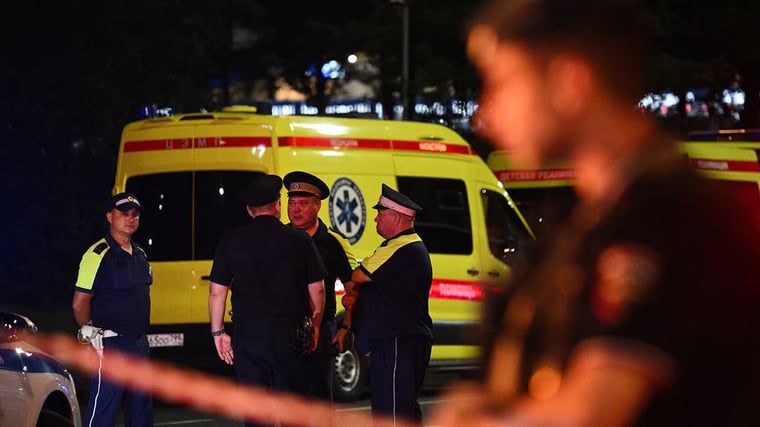
On 28 April 2023, a car hit a mine in Zhuralyovka, another town in the Belgorod region, killing four residents.
There are dozens more reported incidents. In 2024, a Russian camera operator was injured in an explosion while filming a segment about demining. In 2025, mines and unexploded ordnance in border regions killed and injured adults and children alike.
These types of explosions became more frequent in the Kursk region after the incursion by the Ukrainian Armed Forces in August 2024. The media outlet Vot Tak recorded 22 incidents involving mines and other unexploded ordnance in the Kursk region from 23 March to 4 September 2025 alone. This is an average of approximately one incident per week. According to Vot Tak, mines had killed at least six civilians in the Kursk region as of September 2025. Another 19 civilians were injured. On 1 September 2025, Kursk Regional Governor Alexander Khinshtein stated that some 817,000 unexploded ordnances had been discovered in 60 settlements in the region.
The explosions continued into 2026. On 18 May, a man was blown up by an explosive device in Voznesenovka, a village in the Shebekinsky district. The last known incident took place on 23 May, in the village of Sheptukhovka, in the Kursk region, where a 59-year-old resident stepped on a mine and had his right foot torn off. As Novaya Gazeta Europe reported previously, mine explosions had killed at least 33 Russian civilians as of May 2026.
“In theory, sappers should have minefield plans if their unit has a well-organised demining engineering system. But we see from complaints from soldiers themselves that this isn’t always the case. This is partly due to the usual chaos of war, and partly due to the poorly organised transfer of positions from unit to unit, when these maps simply get lost. Sometimes it’s just due to sloppiness.”
“For example, the Russians regularly scatter anti-personnel mines from drones on the streets of Kherson. But mining with drones isn’t just limited to anti-personnel mines. They’ve learned to lay virtually every type of mine from the air. So this is a serious threat: they can fly into an area in the rear that’s considered ‘clear’ and mine it overnight.”